

The Silent Anxiety of Digital Wealth Ownership
Have you ever stared at your screen, watching the market fluctuate, and felt a sudden chill of uncertainty? You might hold digital assets that are worth a significant amount on paper, but the lack of a physical vault makes the whole experience feel fragile. It is a strange tension. You know the technology is powerful, yet you worry about losing your private keys or making a simple clicking error that could vanish your efforts. This stress does not come from the market price alone; it comes from the feeling of not being fully in control of your own property.
Many people start their journey with excitement, buying their first few tokens and watching the numbers change. But soon, the reality sets in. The news is full of stories about lost passwords, forgotten wallets, and complex digital theft. You are not alone if you feel exposed. It is completely normal to lose sleep over the safety of your hard-earned assets. You deserve to sleep soundly, knowing that your digital future is protected by logic and discipline, not just luck.
Most people try to solve this by searching for quick tips on social media, only to find more confusion. They end up jumping from one platform to another, spreading their assets thin and making their management even harder. The truth is, security is not about finding the perfect app. It is about understanding the basic rules of how blockchain actually works. Let us strip away the jargon and focus on how you can claim true ownership and peace of mind.

Rethinking the Digital Vault
To master security, you first have to unlearn how you view money. In the traditional banking world, if you lose your card or forget your password, you call a customer support line. A human verifies your identity, and the bank fixes the problem. That is centralised security. You trust the bank to hold the keys.
Blockchain assets operate on a completely different premise. There is no customer support line for the blockchain network. When you own digital assets, you are your own bank. This gives you incredible freedom, but it also places the entire weight of security on your shoulders. You are not just holding numbers; you are holding a "private key"—a cryptographic password that proves you own those assets.
The Myth of Digital Presence
A common mistake is thinking your coins live inside your wallet app. They do not. Your coins live on the public blockchain, a giant digital ledger that everyone can see. Your wallet app is simply a tool that holds your private key.
Think of your private key like the master key to a safe deposit box. The safe is the blockchain, and your key is the only thing that opens it. If someone gets your key, they open your safe. If you lose your key, the box stays locked forever, and no one—not even the developers—can help you get inside. This is why the mastery of ownership is the most important skill you can learn.
The Foundation of True Ownership
If you want to be a serious, long-term participant in this space, you must change how you store your access. Relying on websites or mobile apps that hold your keys for you is the easiest way to lose everything.
Understanding Storage Categories
- Hot Storage: This refers to any wallet connected to the internet. Think of this like your daily wallet in your pocket. It is convenient for small amounts of spending money, but you would never keep your life savings in your back pocket while walking through a crowded street.
- Cold Storage: This means keeping your keys offline, away from the internet. This is your digital vault. It cannot be hacked remotely because it is not connected to the network when you are not using it.
Why Hardware Wallets Are The Standard
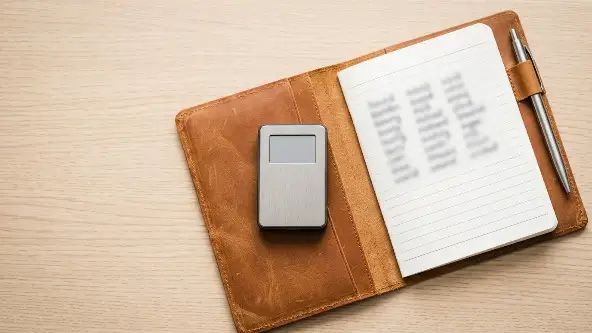
Professional investors almost always use hardware wallets. These are physical devices, often shaped like a USB stick, that keep your private keys sealed inside a secure chip. Even if your computer is infected with a virus, the hacker cannot extract your key from a hardware wallet because the key never leaves the device.
If you are just starting, you might feel that a hardware wallet is an unnecessary expense. However, consider the cost of losing your assets versus the small one-time price of a security device. It is a simple calculation of risk.
The Pencil and Paper Rule
Technology is amazing, but sometimes the lowest-tech solution is the safest. When you set up your wallet, you will be given a "seed phrase"—a list of 12 to 24 random words. This phrase is the master backup for your entire digital identity.
The Danger of Digital Backups
Many people copy-paste this phrase into a note app on their phone or take a screenshot. This is a massive risk. If your phone gets hacked, or if your cloud account is breached, your seed phrase is visible to attackers.
The Rule: Write it down on a piece of paper or engrave it into metal. Keep it in a safe, fireproof place. Do not take photos of it. Do not email it to yourself. Do not store it on a computer. If your house is secure, your digital wealth is secure.
Managing Your Digital Footprint
You also need to think about your online behaviour. When you interact with decentralised applications, you are "signing" transactions with your wallet. Every time you sign, you are giving a website permission to interact with your assets.
Only connect your wallet to websites that you have thoroughly verified. Use a fresh, empty wallet address if you want to experiment with new platforms. Never use your main "vault" wallet for daily trading or testing new apps.
Why Simple is Better
We often believe that more complexity means more security. In the world of blockchain, the opposite is true. Complexity creates more places for things to go wrong.
- Avoid complex multi-layer passwords that you are likely to forget.
- Avoid installing too many plugins or extensions on your browser.
- Focus on one clean, reputable hardware device.
By simplifying your setup, you reduce the number of variables. If you can explain your security process in three simple sentences, you have a solid strategy. If your process requires a ten-step manual, you are inviting disaster.
The Psychology of Long-Term Protection
Security is not just a technical challenge; it is a mental one. The biggest threats are rarely sophisticated hackers breaking encryption. They are human errors—phishing scams, fake links, and impulsive actions.
When you see a message that says "URGENT: Your account is locked; click here to verify." Your brain feels an instinct to act. That panic is your enemy. The blockchain does not send you urgent notifications. If you see a notification that requires immediate action, it is almost certainly a scam.
Developing the Expert Mindset
Expert investors treat their security with the same care as their investment strategy. They do not rush. They do not act on emotion. They take their time to double-check addresses before sending assets.
You should treat your private key as if it were a physical bar of gold in your living room. You would not leave it out on the table, and you would not tell everyone you know where it is kept.
Moving Toward Consistency
Consistency is how you win. Instead of trying to be a security genius overnight, focus on one improvement per week. Move your assets to cold storage. Make a physical backup of your seed phrase. Delete that risky app from your phone. Small, steady improvements add up to a bulletproof system.
You are building a path toward financial freedom, and that path must be safe. By grounding yourself in these fundamentals, you are not just investing in assets; you are investing in the most important thing of all: your own peace of mind.